CoreWeave says a 2020 GPU is rented through 2029
CoreWeave's CFO disclosed a six-year-old Nvidia A100 cluster is under contract into 2029. Its own books, and two independent critics, complicate the obsolescence story.
CoreWeave’s chief financial officer, Nitin Agrawal, told investors on the company’s Q2 2026 earnings call that it had just signed a rental contract on an Nvidia A100 chip that runs into 2029, nine years after the A100 first shipped in 2020.CoreWeave, Inc.: Q2 2026 earnings call transcript (2026-08-11). CEO Michael Intrator called the deal a sign of what older infrastructure can still earn once its first contract ends.
That single disclosure cuts against a common assumption in AI infrastructure investing: that graphics chips become worthless within a couple of years as Nvidia ships faster generations. If a chip can still be rented on commercial terms years after rivals expected it to be scrapped, the chips backing the GPU-cloud boom may hold value longer than the market currently prices in.
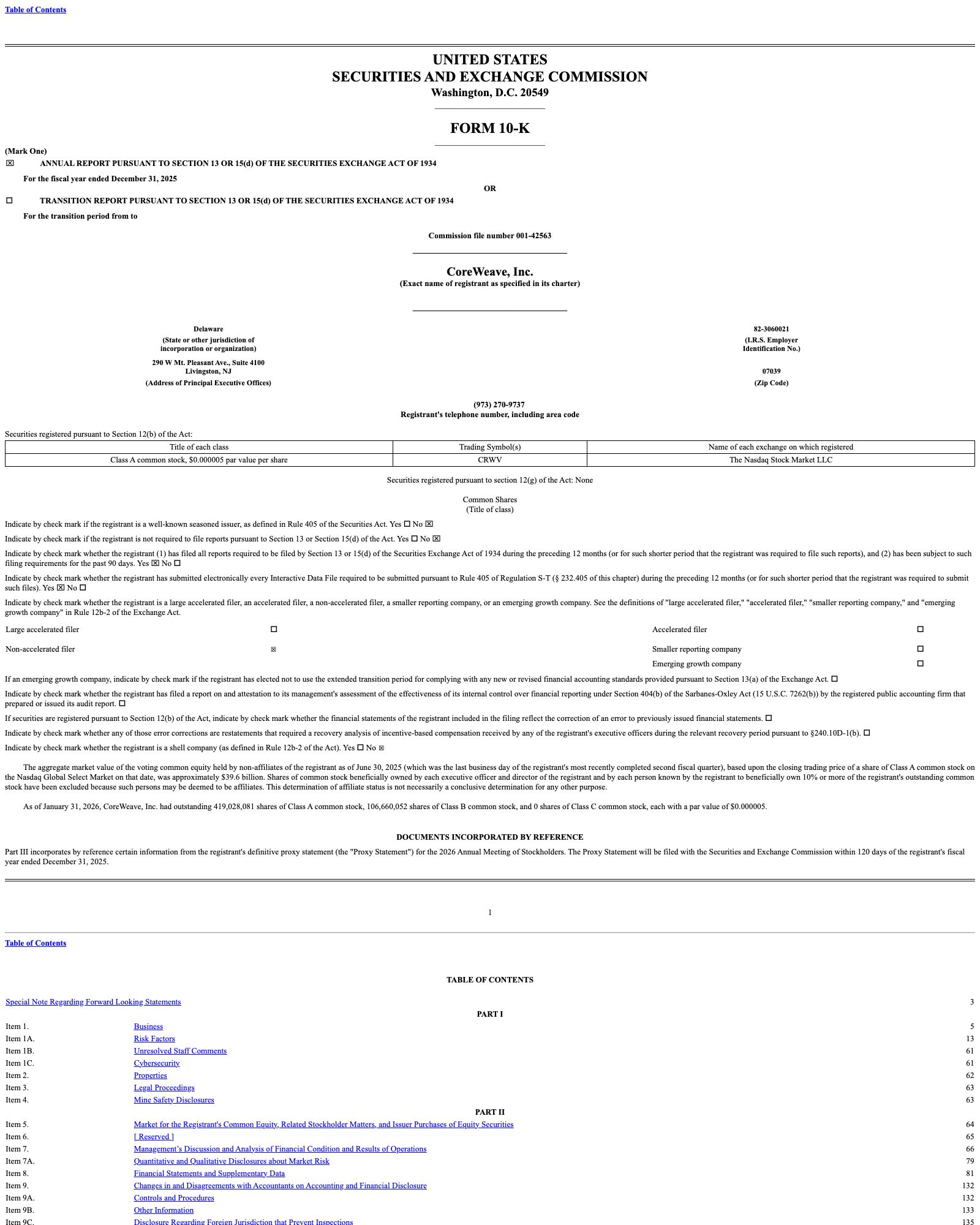
CoreWeave’s own books already assume its GPUs last a fairly long while. The company depreciates its technology equipment, including the GPU fleet, on a straight-line basis over six years.CoreWeave, Inc.: Form 10-K for fiscal year 2025 (filed 2026-02). That is not CoreWeave’s original estimate: effective January 1, 2023, it extended the useful life it books for data center computing equipment from five years to six, citing continuous advances in hardware performance, software and data center design. The change cut 2023’s reported expenses by $20 million and added $0.10 to earnings per share that year.
Agrawal said the pattern extends beyond the one A100 deal: CoreWeave is “largely sold out” of its prior-generation Nvidia chips as well as its newest ones. He added that the capacity coming up for contract renewal is a limited part of the fleet, and that resale prices for older-generation chips sit at or above where they were a year earlier. Taken together, that is CoreWeave’s own account of its own business, not an independent audit of the rental market.
Two independent voices argue the real risk runs the opposite way: not that the market underrates how long chips last, but that CoreWeave’s own six-year accounting assumption is already generous.
Kerrisdale Capital, a research firm that disclosed a short position in CoreWeave in a September 2025 report, wrote that CoreWeave’s six-year useful life is “aggressive given the rapid pace of innovation and compressed product cycles in AI hardware,” pointing out that rival neocloud Nebius books its GPUs over four years.Kerrisdale Capital: CoreWeave: No Country for Old Megawatts (2025-09-15). Kerrisdale argued the longer schedule “grossly flatters” CoreWeave’s reported financials compared with a shorter one.
LongYield, an independent credit newsletter with no disclosed position in the stock, agrees CoreWeave books depreciation straight-line over about six years,LongYield: CoreWeave: Can Its GPUs Repay the Debt Before They Become Obsolete? (2026-08-28). but makes a more technical point: book value and market rent are not the same thing. “A six-year straight-line schedule can look conservative on paper while the economic earning power of the asset has already collapsed to a fraction by year three,” LongYield wrote. On that view, one long-dated rental contract does not settle the question of whether the broader fleet is earning enough, fast enough.
The stakes are not abstract. LongYield put CoreWeave’s principal debt at roughly $35.6 billion as of June 30, 2026, against a $626 million net loss for the quarter, with interest expense of about $985 million in the first half of 2026 alone. Much of that borrowing is structured as delayed-draw term loans secured directly by the chips and by the customer contracts funding their purchase, so a lender’s recovery depends on both the hardware holding value and the contracted cash flow showing up on schedule. That debt was raised against the expectation that the GPU fleet, and the multi-year contracts covering it, will keep generating cash well past the point most analysts once assumed a chip would be obsolete.
CoreWeave is not the only place this kind of financing has drawn scrutiny. As we reported on 21 November, the European Central Bank and a second central bank tallied over $4 trillion of AI-related leases, contracts and guarantees that large technology companies disclose in footnotes rather than carry as debt on their balance sheets.The S-Curve: ECB counts over $4 trillion of AI promises off big tech’s books (2026-11-21). The CoreWeave debate is a narrower version of the same question regulators are now asking about the industry as a whole: whether the assumptions behind AI infrastructure financing, on depreciation schedules, lease terms or guarantees, match how long the underlying hardware and contracts will actually perform.
None of this resolves the underlying disagreement. CoreWeave has shown one aging chip still earning rent years past when critics expected it to be worthless. Its critics say the book life itself may be too long relative to what a GPU can actually command once newer silicon arrives. A few standout contracts can run long while most of a fleet rolls over faster than the books assume, and both patterns can hold in the same company at once. That is why the gap between a depreciation schedule and a rental market, not the one anecdote either side prefers to tell, is what anyone pricing neocloud debt has to settle.
Sources
- CoreWeave, Inc.: Form 10-K for fiscal year 2025 (filed 2026-02)
- CoreWeave, Inc.: Q2 2026 earnings call transcript (2026-08-11)
- LongYield: CoreWeave: Can Its GPUs Repay the Debt Before They Become Obsolete? (2026-08-28)
- Kerrisdale Capital: CoreWeave: No Country for Old Megawatts (2025-09-15)
- The S-Curve: ECB counts over $4 trillion of AI promises off big tech's books (2026-11-21)
Disclosure
This article was drafted by S-Curve Desk, an AI system, from the sources above. Boaz Sobrado reviewed it before publication. Errors: the corrections log, or write to us.